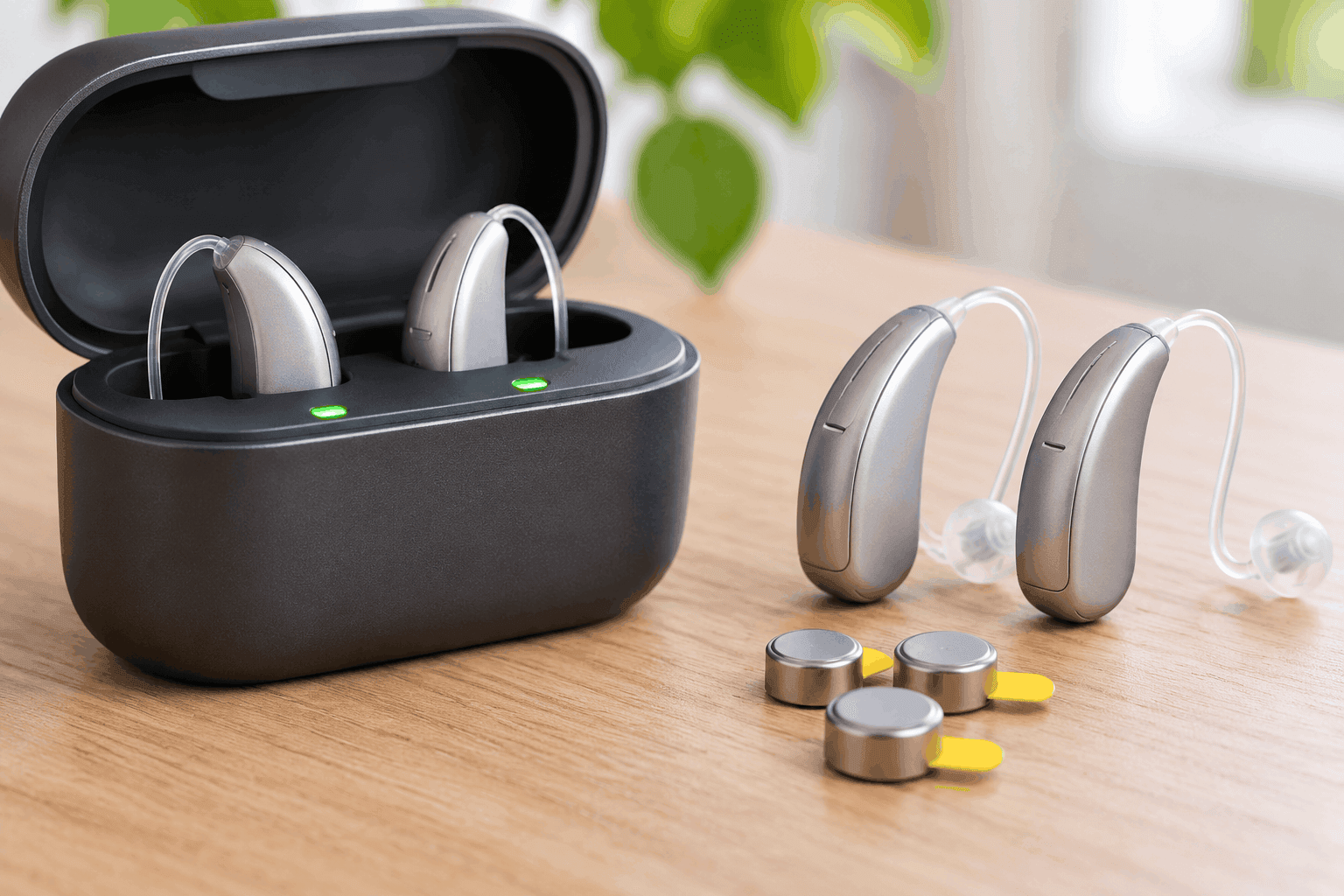
Rechargeable vs Battery Hearing Aids: Which Is Right for You?

Stephen Warnock
24 November 2026 · 7 min read
Rechargeable hearing aids have become increasingly common, but traditional hearing aids using replaceable batteries are still available and can suit some people very well.
Neither option is automatically better. The right choice depends on how you use your hearing aids, how comfortable you are handling small batteries, your daily routine and what you would find most convenient.
If you are choosing new hearing aids, understanding the practical differences can help you decide which option is likely to work best in everyday life.
How Do Rechargeable Hearing Aids Work?
Rechargeable hearing aids contain a built-in rechargeable battery.
Instead of opening the hearing aid and replacing a small disposable battery, you place the devices in a charger when they are not being used, often overnight.
For many people, this makes hearing aids easier to manage as part of a daily routine.
You remove your hearing aids at the end of the day, place them in their charger and put them back in the following morning.
The exact charging time and expected battery life vary depending on the hearing aid model, how it is being used and features such as wireless streaming.
How Do Battery Hearing Aids Work?
Traditional hearing aids use small replaceable batteries.
When the battery runs low, it is removed and replaced with a fresh one.
The batteries are compact and easy to carry, which means you can keep spares with you and replace one when required.
However, handling very small batteries can be difficult for some people, particularly if they have reduced dexterity, arthritis or problems with vision.
What Are the Main Advantages of Rechargeable Hearing Aids?
For many people, convenience is the biggest advantage.
Rather than regularly opening the battery compartment and handling small batteries, rechargeable hearing aids can simply be placed in their charger.
This can make them particularly useful if you:
- find small batteries difficult to handle;
- want a straightforward daily routine;
- prefer not to carry replacement batteries;
- regularly use your hearing aids throughout the day;
- already charge other devices such as a phone each night.
Rechargeable hearing aids can also reduce the need to keep buying and disposing of individual hearing aid batteries.
What Are the Advantages of Replaceable Batteries?
Replaceable batteries can still be a practical choice.
One of their main advantages is that you can carry spare batteries with you. If the battery runs out, it can usually be replaced immediately without needing access to a charger.
This may appeal to people who:
- travel frequently;
- spend time away from mains electricity;
- do not want to rely on remembering to charge their hearing aids;
- are comfortable handling small hearing aid batteries.
Some hearing aid users also simply prefer the routine they are already familiar with.
Which Is Easier to Use?
For many people, rechargeable hearing aids are easier to manage because there is no need to handle very small batteries.
This can be particularly helpful if you have arthritis, reduced hand strength or limited dexterity.
However, ease of use is personal.
You still need to be able to place rechargeable hearing aids correctly into their charger and remember to charge them regularly.
If handling is a concern, it is worth trying the hearing aid and charger during your appointment rather than deciding based on specifications alone.
How Long Do Rechargeable Hearing Aids Last Each Day?
This varies between hearing aid models.
A modern rechargeable hearing aid is generally designed to support normal daily use after charging, but actual battery performance can depend on how the device is used.
For example, streaming phone calls, music or television audio may use more power than ordinary listening.
If you regularly use Bluetooth or other wireless features, tell your audiologist so this can be considered when discussing suitable hearing aids.
Our guide to hearing aid apps and accessories explains more about phone connectivity, wireless controls and accessories.
What Happens If You Forget to Charge Rechargeable Hearing Aids?
If a rechargeable hearing aid has insufficient charge, you may need to recharge it before continuing to use it.
This is why developing a routine can be helpful.
Many people simply place their hearing aids in the charger when they go to bed, making charging part of the same daily routine as charging a mobile phone.
If you are frequently away from home, ask about the charging options available with the hearing aids you are considering.
Are Rechargeable Hearing Aids Better for Travelling?
Both rechargeable and replaceable-battery hearing aids can work well when travelling.
Rechargeable hearing aids mean you do not need to pack a supply of disposable batteries, but you will need the appropriate charger and access to power.
Battery hearing aids allow you to carry spare batteries and replace them when required.
If you travel frequently, think about which approach would be more convenient for you rather than assuming one type is automatically better.
Are Rechargeable Hearing Aids More Expensive?
The cost of hearing aids depends on much more than the type of battery they use.
Technology level, hearing aid style, features and the hearing care package can all affect the overall price.
A rechargeable model may therefore cost more or less than another hearing aid for reasons unrelated to the battery itself.
The better comparison is between suitable hearing aids that meet your hearing and lifestyle needs.
You can view our hearing aid prices to understand the options available from Hear Clear NI.
Does Battery Type Affect Hearing Aid Performance?
Battery type alone does not determine how well a hearing aid will help you hear.
The hearing aid technology, suitability for your hearing loss, programming, fit and ongoing adjustments are all important.
Two hearing aids can use different battery systems while offering similar listening features.
This is why it is better to choose hearing aids based on your overall needs rather than deciding purely between rechargeable and disposable batteries.
What If You Use Bluetooth or Stream Audio Regularly?
Wireless features can be very useful if you want to connect your hearing aids to a phone, television or other compatible device.
However, streaming can increase battery use.
If you regularly:
- make long phone calls;
- stream music;
- listen to podcasts;
- connect hearing aids to television audio;
- use hearing aid apps throughout the day,
mention this when discussing hearing aid options.
Your audiologist can then consider how your typical use may affect battery requirements.
Are Rechargeable Hearing Aids Suitable for Older People?
They can be.
Rechargeable hearing aids are often particularly convenient for people who find disposable batteries difficult to see or handle.
However, age itself does not determine whether rechargeable hearing aids are suitable.
Dexterity, vision, confidence with charging and individual hearing needs are more important considerations.
The best approach is to handle the hearing aids and charger yourself before deciding.
Which Option Is Better If You Have Arthritis?
Rechargeable hearing aids may be easier for someone who finds small batteries difficult to grip or manipulate.
Battery compartments and hearing aid batteries are small, and replacing them can sometimes be awkward when finger movement is limited.
A charging system can remove this part of the routine.
However, the complete hearing aid still needs to be comfortable to insert, remove and maintain, so it is worth considering the whole device rather than the battery system alone.
Can You Try Hearing Aids Before Deciding?
Trying hearing aids in normal everyday situations can help you understand whether the style, features and charging routine suit you.
At Hear Clear NI, a free two-week hearing aid trial is available where appropriate.
During a trial, you can experience how the hearing aids perform at home, at work and in social situations before deciding whether to proceed.
Read more about what happens during a hearing aid trial.
Rechargeable or Battery Hearing Aids: Which Should You Choose?
Rechargeable hearing aids may be a good option if you value convenience, prefer not to handle small batteries and are comfortable charging your hearing aids regularly.
Replaceable-battery hearing aids may suit you if you prefer being able to carry spare batteries and replace them immediately when required.
There is no single correct choice.
Your hearing needs, lifestyle, dexterity, technology preferences and daily routine should all be considered.
At Hear Clear NI, we can explain the available hearing aid options following your hearing assessment and help you compare the practical differences before deciding what feels right for you.
Learn more about hearing aid fitting, trials and aftercare at Hear Clear NI.
Stephen Warnock
Founder & Director | Hearing Aid Audiologist
“Helping people hear better isn't just my profession—it's my passion.” After nearly 15 years working in healthcare, we founded Hear Clear NI because we believed people deserved a more personal, honest and independent approach to hearing care. Too often, hearing care can feel rushed or focused on selling products rather than understanding the individual. I wanted to create a clinic where patients feel listened to, never pressured, and always receive the time, care and expert advice they deserve. For almost six years, that vision has been at the heart of Hear Clear NI. As an independent provider, we're free to recommend the hearing technology that's genuinely right for each patient, with access to all the leading manufacturers rather than being tied to just one brand. Whether you're visiting one of our clinics or welcoming us into your home, my goal is always the same—to help you hear with confidence, reconnect with the people around you and enjoy life to the fullest. Quick Profile... Over 15 years in healthcare Founder & Hearing Aid Audiologist Home hearing and ear care specialist Independent hearing care expert Honest advice with no sales pressure