Which Hearing Aids Are Best for Glasses, Work and Everyday Life?

Stephen Warnock
24 November 2026 · 8 min read
Choosing a hearing aid is not simply about finding the smallest device or the model with the longest list of features. The right hearing aids should suit your hearing needs, but they should also work comfortably with the way you live.
Someone who wears glasses all day may have different priorities from someone who spends much of their working week in meetings. You may want easy phone connectivity, help hearing conversations in busy places, rechargeable batteries or a discreet style that is simple to wear.
There is no single hearing aid that is best for everyone. The most suitable option depends on your hearing, dexterity, ear shape, lifestyle and the situations in which you want the most help.
What Should You Consider When Choosing Hearing Aids?
A hearing assessment should be the starting point. This helps establish the type and level of hearing loss before suitable hearing aid options are discussed.
Lifestyle is also important. Think about the situations where hearing is most difficult for you.
- Do you wear glasses for most of the day?
- Do you regularly work in meetings or busy environments?
- Do you use your mobile phone frequently?
- Would you like to stream calls, music or television audio?
- Do you find small buttons or batteries difficult to handle?
- Are you particularly concerned about how visible your hearing aids are?
- Do you spend a lot of time in restaurants, social groups or other places with background noise?
These practical questions can help narrow down which styles and features are genuinely useful rather than simply choosing technology because it is available.
Which Hearing Aids Are Best If You Wear Glasses?
People who wear glasses can use hearing aids successfully, but comfort and fit are particularly important.
Behind-the-ear and receiver-in-canal hearing aids have a small component that sits behind the ear. This means the hearing aid, glasses arm and sometimes a face covering may all occupy the same area.
That does not automatically make these styles unsuitable. Many people wear glasses and behind-the-ear hearing aids comfortably. The important factor is how everything sits together on your ear.
A receiver-in-canal device may be worth discussing because these models often have a relatively small unit behind the ear with a thin wire leading into the ear canal. Alternatively, an in-the-ear or in-the-canal style keeps the hearing aid itself away from the space behind the ear.
The best choice will depend on factors such as your hearing loss, ear shape, comfort and whether an in-ear style provides the features you need.
If you wear glasses every day, bring them to your hearing aid appointment. Trying the hearing aids with your usual frames can give a much better idea of how comfortable they will be in everyday use.
What About Hearing Aids for Work?
Your working environment can have a significant influence on which hearing aid features are useful.
If you work mainly in a quiet office, your priorities may include comfortable all-day wear, phone connectivity and clear one-to-one conversations.
If you regularly attend meetings, work with groups of people or spend time in busy environments, managing speech alongside background noise may become more important.
Modern hearing aids can be programmed around your individual hearing needs and may include features designed to help in different listening situations. However, technology alone is not the whole answer. The quality of the fitting and subsequent adjustments can make an important difference to how useful the hearing aids feel in real life.
It is therefore helpful to explain your typical working day to your audiologist rather than simply saying that you need hearing aids for work.
Tell them whether you:
- spend time on telephone or video calls;
- attend face-to-face meetings;
- work in open-plan offices;
- deal directly with customers;
- work in busy or noisy surroundings;
- move regularly between quiet and noisy environments.
This gives your audiologist more useful information when discussing suitable technology and programming.
Can Hearing Aids Connect to Phones and TVs?
Many modern hearing aids offer wireless connectivity, although the exact features and compatibility vary between manufacturers and models.
Depending on the hearing aids and device you use, Bluetooth or other wireless technology may allow you to stream phone calls, music or other audio through your hearing aids. Accessories may also be available for televisions and other listening situations.
If connectivity is important to you, it is worth checking compatibility before choosing a particular model.
For example, tell your audiologist which mobile phone you use and whether you regularly use a tablet, television, computer or other device.
Our guide to hearing aid apps and accessories explains more about connectivity, controls and additional hearing aid technology.
Are Rechargeable Hearing Aids Better for Everyday Use?
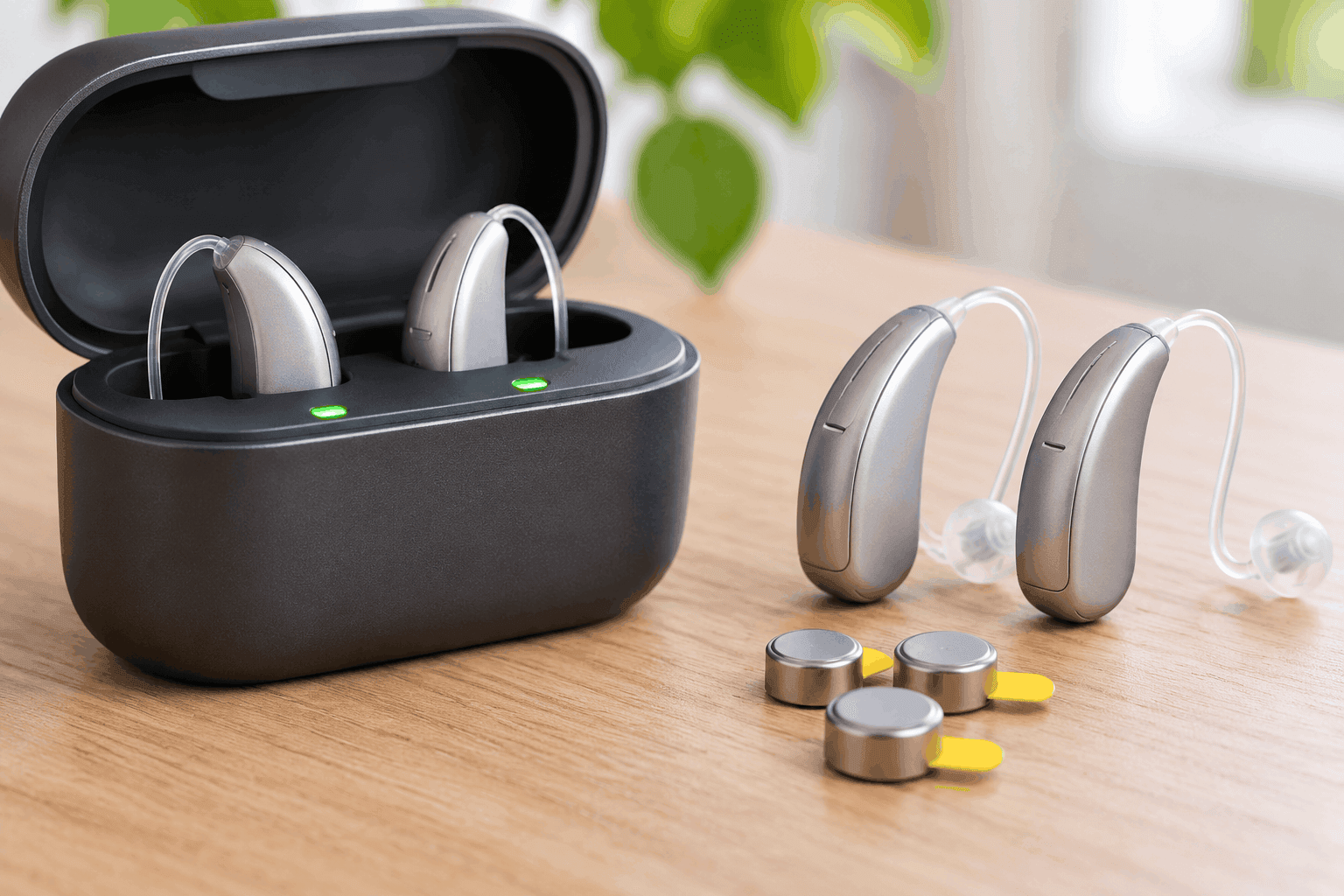
Rechargeable hearing aids can be convenient for people who prefer placing their hearing aids in a charger rather than regularly changing small disposable batteries.
This can be particularly useful if you find small batteries difficult to handle.
However, rechargeable does not automatically mean better. Your choice should still take account of the hearing aid style, expected daily use, charging routine and the other features you need.
Some people prefer the convenience of charging their hearing aids overnight. Others may prefer replaceable batteries because they can carry spares and change them when necessary.
The right choice is the one that fits comfortably into your normal routine.
Which Hearing Aids Are Best for Busy Restaurants and Social Situations?
Restaurants, family gatherings and other busy environments can be challenging because several voices and background sounds may be competing for your attention.
This is an area where an appropriately selected and well-fitted hearing aid can be particularly important.
Rather than choosing a device solely because it is described as a premium model, discuss the situations you actually find difficult.
Someone who spends a lot of time in restaurants, community groups or social events may benefit from different technology or settings from someone whose main difficulty is following television at home.
Your hearing aids may also require adjustment after you have used them in real-world situations. This is one reason why the trial and aftercare process matters.
Our guide to what happens during a hearing aid trial explains how this period can help you assess hearing aids in normal day-to-day situations.
Are Smaller Hearing Aids Always Better?
No.
Small and discreet hearing aids are attractive to many people, but visibility should be only one part of the decision.
Completely-in-the-canal and invisible-in-the-canal hearing aids can be very discreet, but smaller devices may be more difficult to handle and may not be appropriate for every level of hearing loss or every set of technology requirements.
Larger hearing aid styles can sometimes be easier to insert, remove and operate.
It is therefore better to compare the practical advantages of the available styles rather than simply choosing the smallest device.
You can read more about the differences between types of hearing aids, including behind-the-ear, receiver-in-canal and in-the-ear options.
What If You Find Small Controls Difficult?
Dexterity is an important but sometimes overlooked part of choosing hearing aids.
If you have arthritis, reduced feeling in your fingers or simply dislike handling very small components, tell your audiologist.
Features that may be worth considering include:
- rechargeable batteries;
- larger or easier-to-use controls;
- automatic programmes;
- smartphone app controls where appropriate;
- hearing aid styles that are easier to insert and remove.
The smallest hearing aid is not necessarily the easiest hearing aid to live with.
A device that you can confidently put in, remove, charge and maintain is often a better everyday choice than one selected mainly because it is less visible.
Should You Choose Hearing Aids Based on Technology Level?
Technology level matters, but it should be considered in the context of your needs.
Someone with a relatively quiet lifestyle may not need the same feature set as someone who frequently moves between meetings, restaurants, events and other complex listening environments.
The aim should be to find an appropriate balance between hearing needs, useful features, comfort and budget.
A more expensive hearing aid is not automatically the right choice for every person.
At Hear Clear NI, hearing aid recommendations are based on your hearing assessment and the situations in which you want support. You can also compare our hearing aid prices and hearing care costs before deciding what is right for you.
Why Does the Hearing Aid Fitting Matter?
Choosing the device is only part of the process.
Hearing aids need to be fitted and programmed for your hearing. You may then need further fine-tuning as you become accustomed to wearing them and experience different listening situations.
For example, you might find that your hearing aids work well at home but need adjustment after you have tried them in a busy restaurant or at work.
Follow-up support gives you an opportunity to discuss these experiences and make appropriate changes.
This is why it is useful to consider the complete hearing-care service, including fitting, trial and aftercare, rather than comparing hearing aids purely by model or price.
Choosing Hearing Aids for Your Lifestyle
The best hearing aids for everyday life are the ones that suit both your hearing and the way you actually spend your time.
If you wear glasses, work in meetings, use your phone throughout the day or regularly spend time in noisy social environments, make these priorities part of the conversation when choosing your hearing aids.
A good hearing aid recommendation should take account of the whole picture: your hearing assessment, comfort, technology needs, dexterity, lifestyle and budget.
Hear Clear NI provides hearing aid advice, fitting, trials and ongoing aftercare from our Belfast and Bangor clinics.
Learn more about our hearing aid fitting and aftercare service.
Stephen Warnock
Founder & Director | Hearing Aid Audiologist
“Helping people hear better isn't just my profession—it's my passion.” After nearly 15 years working in healthcare, we founded Hear Clear NI because we believed people deserved a more personal, honest and independent approach to hearing care. Too often, hearing care can feel rushed or focused on selling products rather than understanding the individual. I wanted to create a clinic where patients feel listened to, never pressured, and always receive the time, care and expert advice they deserve. For almost six years, that vision has been at the heart of Hear Clear NI. As an independent provider, we're free to recommend the hearing technology that's genuinely right for each patient, with access to all the leading manufacturers rather than being tied to just one brand. Whether you're visiting one of our clinics or welcoming us into your home, my goal is always the same—to help you hear with confidence, reconnect with the people around you and enjoy life to the fullest. Quick Profile... Over 15 years in healthcare Founder & Hearing Aid Audiologist Home hearing and ear care specialist Independent hearing care expert Honest advice with no sales pressure