Is Microsuction Safe? What to Know Before Ear Wax Removal

Stephen Warnock
24 November 2026 · 6 min read
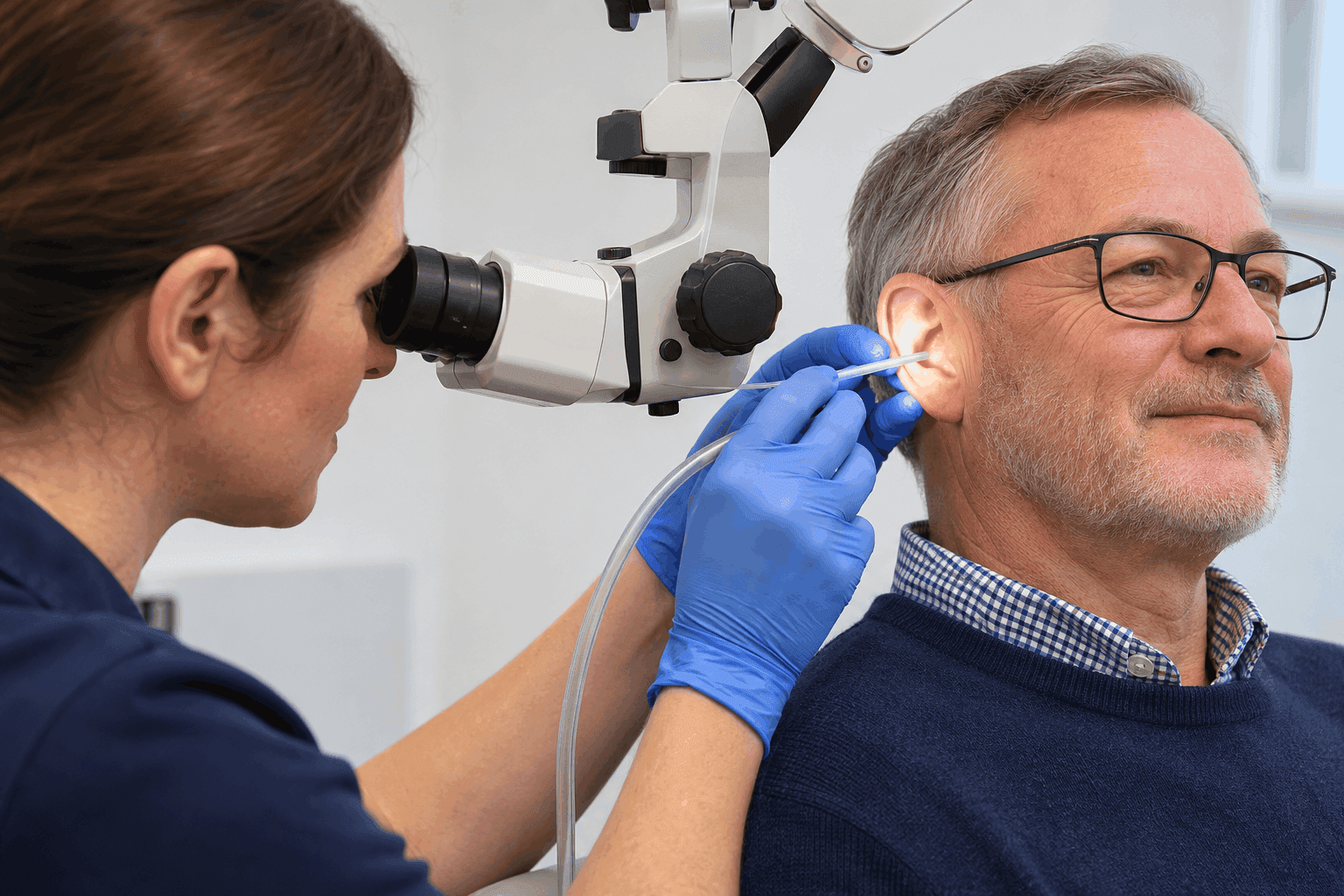
Microsuction is a professional method of removing excess or impacted ear wax using a small suction device while the clinician views the ear canal.
For many people, it can be an appropriate way to remove troublesome ear wax. However, no ear wax removal method is suitable for everyone, so your ears should be assessed before treatment and any relevant medical history should be discussed.
Understanding what happens during microsuction, how it compares with other methods and what the possible risks are can help you know what to expect.
What Is Microsuction Ear Wax Removal?
Microsuction removes ear wax using a small suction probe.
Before treatment, the practitioner examines the ear canal and eardrum as far as it can be seen. The wax is then removed while the ear is being viewed directly.
Unlike ear irrigation, microsuction does not rely on flushing the ear canal with water.
The NHS lists microsuction alongside irrigation and manual removal as methods that may be used to remove troublesome ear wax.
Is Microsuction Safe?
Microsuction is widely used for professional ear wax removal, but it should be carried out by someone appropriately trained and using suitable equipment.
Before removing the wax, the practitioner should ask about your ear and medical history and examine the ear canal. This helps determine whether treatment is appropriate and which method may be most suitable.
RNID recommends checking that private ear wax removal is provided by a suitably qualified professional, such as an audiologist, nurse or doctor who is trained in ear wax removal.
Does Microsuction Hurt?
Many people tolerate microsuction without significant discomfort, although everyone's ears are different.
The ear canal can be sensitive, particularly if the wax is very hard, the skin is irritated or the ear is already sore.
You should tell the practitioner immediately if you experience discomfort during the procedure.
Treatment can be paused or stopped if necessary.
Can Microsuction Make You Feel Dizzy?
Some people may briefly feel dizzy during microsuction.
This can happen because the suction may temporarily change the temperature inside the ear canal.
If you feel dizzy, tell the practitioner. NHS hospital guidance notes that this usually passes within a few minutes.
Can Microsuction Affect Your Hearing or Tinnitus?
Microsuction equipment makes noise inside the ear.
Temporary changes in hearing, increased sensitivity to sound or tinnitus have occasionally been reported following microsuction. NHS hospital guidance describes these effects as uncommon and states that they are temporary for most people who experience them.
If you already have tinnitus, sound sensitivity or concerns about your hearing, mention this before treatment.
Is Microsuction Suitable If You Have a Perforated Eardrum?
Having a perforated eardrum does not automatically mean that every ear wax removal method is appropriate.
Ear irrigation is generally avoided when there is a history of eardrum perforation, certain previous ear surgery or particular ear problems because it introduces water into the ear canal.
Microsuction may sometimes be considered when irrigation is unsuitable, including in some people with a perforation or previous ear surgery.
However, this must be assessed individually. Always tell the practitioner if you have:
- a current or previous perforated eardrum;
- had ear surgery;
- had grommets;
- experienced recent ear infections;
- had discharge from the ear;
- previously experienced problems following ear wax removal.
The practitioner can then decide whether microsuction is appropriate or whether further medical assessment is needed.
What Is the Difference Between Microsuction and Ear Irrigation?
Both methods can be used to remove ear wax, but they work differently.
Microsuction uses a small suction device to remove wax while the practitioner views the ear canal.
Ear irrigation introduces water into the ear canal to flush the wax out.
One method is not automatically right for everyone.
The choice can depend on the condition of the ear canal and eardrum, your previous ear history, the type and position of the wax and whether there are reasons why irrigation should be avoided.
Is Microsuction Better Than Ear Syringing?
Traditional manual ear syringing is different from modern electronic ear irrigation.
Current NHS guidance refers to electronic irrigation, microsuction and manual removal as professional methods of removing ear wax.
Rather than assuming one method is always "best", the more useful question is which method is appropriate for your individual ears and medical history.
Do You Need to Soften Ear Wax Before Microsuction?
Whether you should use ear drops beforehand depends on your ears, the wax and the advice you have been given.
Softening very hard wax can sometimes make removal easier.
However, ear drops are not suitable for everyone. NHS guidance advises against using drops without medical advice if you have a perforated eardrum, and RNID recommends seeking advice first if you have a known ear infection, significant ear pain, discharge or certain skin conditions affecting the ear.
Follow the preparation instructions provided by your hearing-care professional rather than treating the ear yourself if you are unsure.
What If the Wax Cannot Be Removed?
Sometimes all of the wax cannot be removed during one appointment.
This can happen if the wax is particularly hard, deeply positioned or if continuing treatment would cause unnecessary discomfort.
The practitioner may recommend further softening treatment, another appointment or medical assessment depending on what they see.
Trying to force difficult wax out is not the aim. Safe ear care is more important than completing removal at all costs during a single visit.
Can You Have Microsuction If You Wear Hearing Aids?
Hearing aid users can experience problems when excess wax builds up.
Wax may block the ear canal or interfere with the operation of a hearing aid.
If you wear hearing aids, tell the practitioner before ear wax removal and bring your hearing aids with you if requested.
Removing troublesome wax may help ensure the ear canal can be properly examined and may resolve problems caused specifically by wax blockage.
However, persistent hearing difficulty should not automatically be assumed to be caused by wax.
Can You Remove Ear Wax Yourself?
Ear wax normally moves out of the ear naturally.
If you have a build-up, a pharmacist or healthcare professional may recommend appropriate ear drops or other treatment depending on your circumstances.
Do not insert cotton buds, fingers or other objects into the ear canal. NHS guidance warns that this can push wax further into the ear and may cause damage.
Ear candles and home ear vacuum devices are also not recommended by the NHS as treatments for ear wax build-up.
When Should You Seek Medical Advice Instead?
Ear symptoms are not always caused by wax.
Seek appropriate medical advice if you have symptoms such as:
- significant ear pain;
- discharge from the ear;
- signs of an ear infection;
- sudden or unexplained hearing loss;
- persistent dizziness;
- a known or suspected perforated eardrum;
- symptoms that continue after the wax has been removed.
A professional ear examination can help establish whether wax is actually the cause of your symptoms.
What Happens at a Microsuction Appointment?
The practitioner will normally begin by asking about your symptoms and relevant ear history.
Your ears are then examined before treatment begins.
If microsuction is appropriate, a small suction probe is used to remove the wax while the practitioner views the ear canal.
You can tell the practitioner at any point if you experience discomfort or need the procedure to stop.
Microsuction Ear Wax Removal at Hear Clear NI
Hear Clear NI provides professional microsuction ear wax removal from its clinics in Belfast and Bangor.
Before treatment, your ears are checked so the practitioner can assess the wax and determine whether microsuction is appropriate.
If you are experiencing blocked ears or believe ear wax may be affecting your hearing, you can learn more about our microsuction ear wax removal service.
Stephen Warnock
Founder & Director | Hearing Aid Audiologist
“Helping people hear better isn't just my profession—it's my passion.” After nearly 15 years working in healthcare, we founded Hear Clear NI because we believed people deserved a more personal, honest and independent approach to hearing care. Too often, hearing care can feel rushed or focused on selling products rather than understanding the individual. I wanted to create a clinic where patients feel listened to, never pressured, and always receive the time, care and expert advice they deserve. For almost six years, that vision has been at the heart of Hear Clear NI. As an independent provider, we're free to recommend the hearing technology that's genuinely right for each patient, with access to all the leading manufacturers rather than being tied to just one brand. Whether you're visiting one of our clinics or welcoming us into your home, my goal is always the same—to help you hear with confidence, reconnect with the people around you and enjoy life to the fullest. Quick Profile... Over 15 years in healthcare Founder & Hearing Aid Audiologist Home hearing and ear care specialist Independent hearing care expert Honest advice with no sales pressure